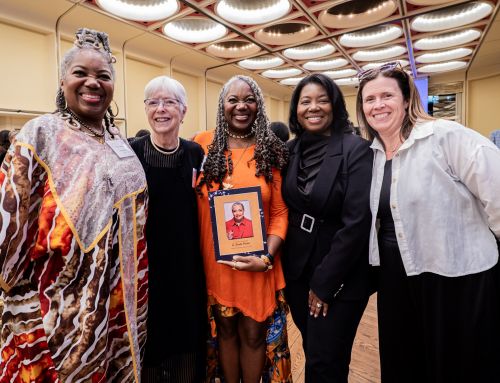
Ignite the Spark is a teacher award program that highlights the individuals who are inspiring Milwaukee’s next generation. This year MMAC is honoring 10 educators representing all Milwaukee schools (public, private, charter) and all grade levels (K-5, K-8, 6-8, HS)
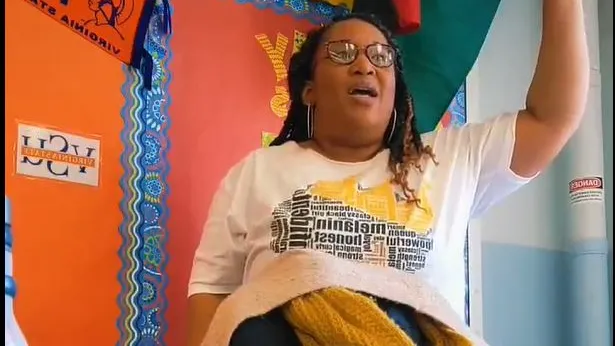
What inspired you to become an educator?
I was inspired to become an educator for a couple of deeply personal reasons. First, I wanted to be the kind of teacher I needed when I was growing up, someone who saw me, believed in me and created a space where I felt valued and capable. That experience, or lack of it, stayed with me and shaped how I show up for my students today.
Secondly, I felt a strong responsibility to give back to my community, the very community that raised me and played a role in shaping who I am. Becoming an educator felt like a powerful way to pour into the next generation, to create opportunities and to help students see their own potential.
For me, teaching is more than a profession; it’s a commitment to equity, community and ensuring that every child has access to the support and encouragement they deserve.
How would you describe your teaching philosophy or approach to learning?
My teaching philosophy starts with this: I teach the way I needed to be taught.
My approach is rooted in relationships, equity and what I call an abolitionist teaching praxis, the belief that education should actively disrupt inequities, not reproduce them. That means creating a classroom where students feel seen, valued and powerful, while also challenging systems that were never designed with all of our children in mind.
I believe learning should be engaging, affirming and connected to real life. I center my students’ identities, voices and experiences, while also making sure they have strong foundational skills to navigate the world confidently.
More than anything, I see my role as helping students recognize their brilliance, especially in spaces that haven’t always reflected it back to them.
This work is personal. It’s about giving back to the community that raised me and showing up every day with purpose, love and a commitment to do things differently.
What do you find most rewarding about being an educator?
What I find most rewarding about being an educator is witnessing those moments when it clicks, not just academically, but personally for my students. It’s when a student who once said “I can’t” starts to say “I can.”
It’s when they find their voice, take risks and begin to see themselves as capable and brilliant.
I also find so much joy in the relationships. Being a consistent, safe, and affirming presence in my students’ lives means everything to me. For some of them, school is where they feel most seen, and I don’t take that lightly. Honestly, it’s the growth. Watching students evolve over time, academically, socially, emotionally. Knowing you played even a small role in that journey.
The most rewarding part is knowing this work goes beyond the classroom. You’re not just teaching content, you’re shaping confidence, identity and planting seeds for the future.
What is one of the biggest challenges you face as an educator today?
One of the biggest challenges I face as an educator today is navigating systems that weren’t designed with all students in mind, while still showing up every day determined to meet their needs. There’s often a gap between what students truly need to thrive and what policies, funding structures or mandates allow us to do. As educators, we’re asked to do more with less, all while addressing not just academics, but the social, emotional and real-life experiences our students bring into the classroom.
Another challenge is combating deficit narratives about our children, especially Black and Brown students. Too often, the conversation focuses on what they lack instead of recognizing their brilliance, resilience and potential. Shifting that narrative is constant work.
What advice would you give to someone considering a career in education?
The advice that I would give to someone who is considering a career in education is to consider what you believe about children. Do you believe that all children can, will and must learn? Because that belief isn’t optional, it’s the foundation. Because the moment you start questioning whether certain students are capable, you begin to lower expectations, and that shows up in your teaching.
So my advice is this: hold the line on that belief. Every child is capable of brilliance, even when it doesn’t show up in traditional ways or on a timeline we expect. This work will challenge you. There will be systems, barriers and moments that make it hard, but your belief in children has to be stronger than all of that.
You also have to be willing to learn and unlearn. To reflect on your own biases, to grow in your practice, and to teach in ways that actually meet students where they are while still pushing them forward. Don’t forget that relationships matter. Students learn best from people they trust, people who see them and people who refuse to give up on them.
If you can commit to that, if you truly believe in the potential of every child, then this work isn’t just a job, it’s a responsibility. Our students deserve nothing less.
What excites you most about the future of education?
What excites me most about the future of education is the growing shift toward reimagining what school can and should be by future educators. I’m excited that more educators are challenging traditional models and asking deeper questions about equity, student voice and what it really means to prepare young people for the world, not just academically, but socially and emotionally too.
I’m especially energized by the way more classrooms are becoming spaces that center identity, culture and belonging. We’re seeing a stronger push toward culturally responsive and abolitionist teaching practices, where the goal isn’t just to help students succeed within systems, but to empower them to question and transform those systems.
I’m also excited about how educators are collaborating, sharing ideas and building community beyond their own schools. There’s a collective energy right now, people who are committed to doing this work differently and more intentionally. Finally, what excites me most is our students. They are thoughtful, aware and unafraid to speak up. When we create the right conditions, they show us every day what’s possible.
The future of education, to me, looks like classrooms that are more human-centered, more just and more responsive to the needs of all learners, and I’m excited to be part of that shift.